Of all the visual assets a streamer can commission, the stream intro is the one most often built without a clear reason. Streamers see other channels using one, see overlay packs include one, see template marketplaces selling them for $20, and add one to the stream because that is what serious streamers do. Then it sits at the front of every broadcast for a year, sometimes works and often does not, and quietly trains a percentage of the audience to skip the start of every stream.
A great stream intro is one of the most powerful single assets a channel can have. A bad one is dead weight that costs the channel attention every time it plays. The difference is almost entirely about whether the streamer thought through what the intro is for before commissioning it. Most do not, which is why most stream intros do not earn their place.
This guide covers what a stream intro actually is, the four legitimate reasons to have one, the situations where you should not bother, what makes a great intro versus a forgettable one, the right technical specs, and how to commission one that does not feel like a recycled YouTube template the way most cheaply-bought intros do.
- What a stream intro actually is
- Stream intro vs Starting Soon screen
- Four legitimate reasons to have one
- When you should not bother
- The anatomy of a great stream intro
- How long an intro should run
- Technical specs and OBS setup
- Why template intros usually feel cheap
- Six common stream intro mistakes
- The takeaway
What a stream intro actually is
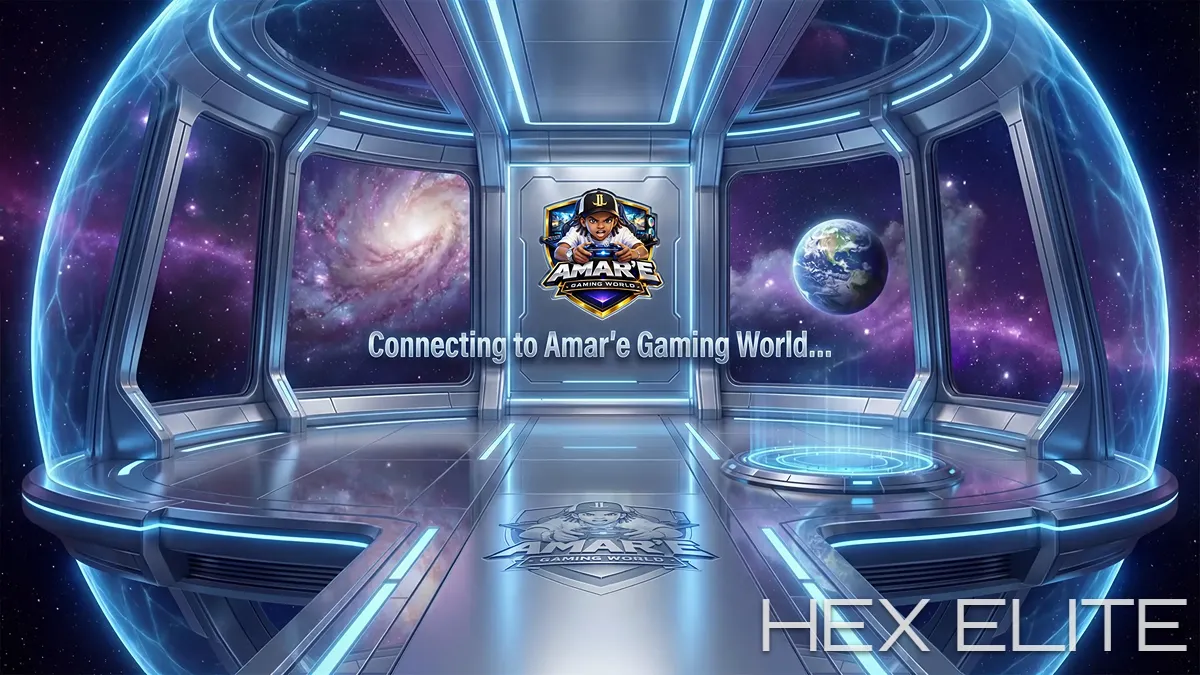
A stream intro is a short cinematic clip that plays once at the start of a stream, typically 5 to 15 seconds long, designed to open the broadcast with a defined visual moment before the streamer cuts to their main scene. It usually includes a logo reveal, a sound design beat, sometimes a title card with the streamer's name or content type, and lands on a final brand frame before the stream proper begins.
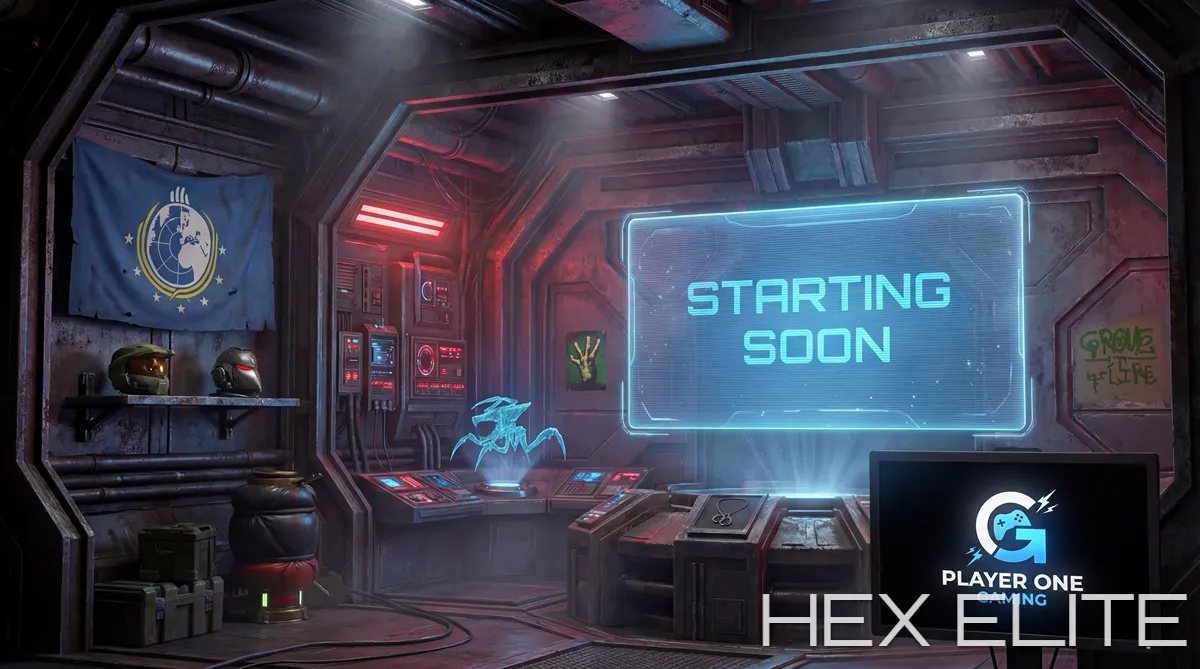
An intro is not a Starting Soon screen. They serve different moments and have different jobs. A Starting Soon screen runs in the minutes before the stream officially begins, holding viewers' attention while late arrivals join. A stream intro plays the moment the streamer is ready to begin, as a short transitional cinematic between Starting Soon and the main stream.
The simplest way to picture the sequence: viewers wait on the Starting Soon screen, the streamer cues the intro, the intro plays for 10 seconds, the intro ends on a logo frame, the streamer cuts to their main gameplay or chat scene. The intro is the visual handshake between "waiting" and "live".
Stream intro vs Starting Soon screen
This is the distinction most streamers get wrong, often by collapsing both into one asset. Here is how the two differ:
| Attribute | Starting Soon Screen | Stream Intro |
|---|---|---|
| Plays | Before the stream begins | At the moment the stream begins |
| Duration | 3 to 10 minutes (looped) | 5 to 15 seconds (played once) |
| Job | Hold attention while waiting | Mark the start with a defined beat |
| Loop | Yes, seamless | No, plays once |
| Energy curve | Flat ambient | Builds to a punctuation |
| Audio | Background music, no stinger | Sound design beat, often a sting |
| Focus | Atmosphere | Brand mark, logo |
Both are valuable. They do different jobs. A channel can have one, the other, or both. Most professional streamers in 2026 have both, with the Starting Soon screen running for the pre-stream window and the intro playing as the cinematic transition into the live show. For more on Starting Soon screens specifically, see our full sizing guide.
Four legitimate reasons to have one
An intro is worth commissioning if any of these are true. If none of them are, the intro is probably not earning its place at the front of every stream.
1. You record content that gets repurposed off-platform
If you re-upload your streams as YouTube VODs or run a podcast version of your stream, an intro is doing real work in those off-platform contexts. A YouTube VOD that opens with a 10-second cinematic intro feels like a finished show. A YouTube VOD that opens with the streamer mid-sentence in their main scene feels like a screen recording. Off-platform repurposing is where intros pay off most consistently — though specifically for short-form (TikTok, Reels, Shorts), the original 16:9 intro is almost always dropped during the clipping process and replaced with a 1 to 3 second hook tuned to the platform's first-seconds attention curve. The intro pays off in long-form repurposing, not in short-form clips.
2. You stream high-energy content that benefits from a hype open
Esports, FPS, hype-driven gaming, sports content, music streams - any genre where the audience expects energy from the first second benefits from an intro that lands with sound and motion. The intro becomes a Pavlovian "the show is starting" beat that primes the audience to settle in.
3. You have brand polish that other channels do not
For partnered, established or rapidly-growing channels where the broader visual identity is already strong (custom 3D scenes, distinctive logo, consistent typography, coordinated overlay), an intro is the keystone that ties the production together. The intro is the moment the audience sees all the brand elements in motion at once.
4. You want a soft re-entry after a YouTube ad
YouTube ads sometimes play before a VOD begins. The cut from a pre-roll ad to live gameplay or chat content is abrupt — a few seconds of "this stream is starting" intro right after the ad smooths the experience and gives the YouTube thumbnail and title a moment to register before the content begins. (YouTube creators no longer toggle individual pre-roll, post-roll, or skippable ad placements the way they could pre-2023 — the system serves whatever combination is appropriate based on the channel's monetisation settings — so the intro here is doing the smoothing work, not the ad-control work.)
When you should not bother
An intro is wrong for these situations:
- You are still finding your channel's voice. An intro freezes a brand identity in place. Commissioning one before you know what your channel actually is, what content style you have settled on, what colours and tone you live in, locks you into something that may not fit by month six.
- Your audience is fully on Twitch and you do not repurpose content. If 100% of your viewing happens on a live Twitch stream and you do not re-upload anywhere, the intro plays for an audience that already loaded the stream and is waiting for content. The use case is weakest here.
- You stream cozy or slow-paced content. A loud cinematic intro fights the relaxed mood of cozy streams, study streams, ASMR, or slow indie gaming. If you are streaming for vibes, an intro often breaks the vibe before you have a chance to set it. Skip the intro and let viewers ease into the stream.
- You only have budget for one custom asset and your other visuals are weak. An intro is the wrong place to put a single custom-asset budget. The Starting Soon screen and main background carry far more total visible time. If your other visuals are templates or weak, fix those first - see our piece on building a cohesive stream brand from scratch.
- The intro will be the only "branded" moment in the stream. An intro that exists in isolation against a generic background and template overlays calls attention to the gap between itself and the rest of the stream. The intro should be the most polished version of a visual identity that is already polished elsewhere.
The anatomy of a great stream intro
A great intro is built from a small number of beats, each doing a specific job. The conceptual arc — setup, build, drop, close — is borrowed from EDM song structure and is well-established in motion-design practice; the second-by-second breakdown below is our own framework, sized to a 10 to 12 second intro. Adjust the timecodes proportionally if your intro is shorter or longer.
The visual hook
The first 1 to 2 seconds need to grab attention without giving anything away. A particle reveal, a camera move starting in shadow, a soft glow building, an environment fading in from black. The hook does not have to be loud - it has to be different enough from whatever the viewer was just watching that their eye stops scrolling and locks onto the frame.
The build
The middle of the intro is where the cinematic motion happens - the camera moves, the environment builds, particles flow, light shifts. This is the longest section of the intro and the part that carries the production-value signal. A great build feels intentional and sized to the brand. A cheap build feels like After Effects template animations stacked on top of each other.
The logo land
The build resolves on the logo. Music drops. Particles settle. The logo lands in its final position with a clear sound design beat. This is the single most-remembered second of the intro and the moment that earns the audience's recognition over time. The logo land has to be sharp, clean, and confidently held - not lost in a busy frame, not undercut by a weak typeface, not hidden behind effects that compete with it.
The handoff frame
The intro needs a final frame that is calm enough to cut from cleanly. A logo on a quiet background, holding for a beat, ready for the streamer to cue the cut to their main scene. Intros that try to be exciting all the way to the last frame make the cut to the main scene feel jarring. The handoff frame is the visual pause that lets the audience prepare for the live content.
That is it. Four beats, 10 to 15 seconds total, designed to escalate then resolve. Intros that try to do more usually do less.
How long an intro should run
The right length depends on what the intro is for, but a few useful reference points:
| Length | Best for | Risk |
|---|---|---|
| 5 to 7 seconds | Quick brand stings, repurposed content openers, ad-skip transitions | Sometimes too short for a satisfying cinematic build |
| 8 to 12 seconds | The sweet spot for most stream intros | Few; this is the safest range |
| 13 to 18 seconds | Cinematic flagship intros for established brands | Audience may start skipping after the second viewing |
| 20+ seconds | Almost never the right call | Trains audience to skip the first 20 seconds of every stream forever |
If you are unsure, default to 10 seconds. It is long enough to do a real cinematic build and short enough that returning viewers do not start tuning out. Twitch and YouTube viewers in 2026 have very short patience for content that feels like it is making them wait.
The intro should be shorter than the time it takes a returning viewer to want to skip it. For most channels in 2026, that is around 10 seconds. Above 15, you are betting that the cinematic value is high enough to earn the patience. Below 8, you may not have enough time for the build to land. Aim for 10.
Technical specs and OBS setup
| Setting | Recommended value |
|---|---|
| Resolution | 1920 x 1080 (or 4K if streaming at 4K) |
| Aspect ratio | 16:9 |
| Frame rate | 60 fps for cinematic intros, 30 fps acceptable for simpler ones. For a film-style 24 fps look, render at 60 fps with motion blur rather than delivering a 24 fps source file — 24 fps inside a 60 fps OBS pipeline produces visible judder |
| File format | MP4 (H.264) |
| Bitrate | 10 to 16 Mbps (intros benefit from higher bitrate; they play once, file size matters less) |
| Duration | 10 seconds default; 5 to 15 acceptable |
| Audio | Embedded music + sound design (unlike loops, intros usually include audio) |
| Loop | No - intros play once, not on loop |
| Final frame | Quiet logo frame for clean cut to next scene |
One important difference from your other animated stream assets: intros usually include their own audio (a music stinger, a sound design build, a logo-land beat). This is the opposite of the rule for Starting Soon, BRB and Ending screens, where audio should be kept separate. The reason is that the intro plays once for ten seconds, so the audio is timed to specific visual moments and cannot be desynced from the visuals. A separate music track would not align with the build and the drop.
For OBS setup, the cleanest workflow is to put the intro in its own dedicated scene with the Media Source set to not loop and restart playback when source becomes active. The streamer cuts to the intro scene at the start of the stream, the intro plays through once, and at the end of the intro the streamer manually cuts to the main scene. If you would rather the cut happen automatically when the intro finishes, the Advanced Scene Switcher plugin (Warmuptill) is the standard tool — its "Played to end" media-state condition triggers a scene switch when the source completes, and it has been the go-to OBS auto-advance plugin for years. For broader OBS playback configuration, see our OBS setup guide.
Why template intros usually feel cheap
The intro market is heavily template-driven. A search on Etsy, Fiverr or any overlay marketplace returns thousands of "stream intro template" listings at $10 to $40 each, most of them built in After Effects with a logo placeholder and a few text fields for channel name, tagline and social handles, plus a generic build that the buyer customises with their own assets.
The visible problem is that streamers who watch a lot of streams have seen these exact templates many times before. The same fast camera flythrough, the same neon line draw, the same particle explosion landing on a logo - these read as "stream intro pack" to a viewer who has seen them before, regardless of whose logo is dropped in. The template trains the audience to identify the channel as low-investment within the first 5 seconds of every stream.
The deeper problem is that template intros are designed without your specific brand in mind. The motion was choreographed for whatever logo the template demo was built around, and your logo is being forced to fit that pre-existing motion. Custom intros are built the other way around: the brand and logo come first, and the motion is designed to make that specific identity land. The visible difference is large even for viewers who could not articulate it. We have a longer take on this in why custom 3D stream visuals outperform template packs.
Six common stream intro mistakes
1. The intro is longer than the audience's patience
Above roughly 15 seconds, you start training returning viewers to skip the start of every stream — there's no peer-reviewed cliff at that exact number, but it's the rough threshold where the creator community in our experience starts seeing skip behaviour kick in. Once viewers are in the habit of skipping, they sometimes skip past the actual content too. Keep it short.
2. The intro is louder than the rest of the stream
An intro that hits at full mix volume followed by a streamer talking at conversational volume creates a jarring drop. Either match the intro audio level to the streamer's natural mic level, or leave a fade at the end of the intro to ease the transition.
3. The intro does not match the main stream's visual identity
A neon cyberpunk intro followed by a soft cozy main scene reads as two different channels stitched together. The intro should be the highest-energy moment of a visual world that the main stream lives in - not a different world altogether. We cover this principle in detail in our stream brand building guide.
4. The logo lands in a busy or moving frame
The whole point of the logo land is the audience seeing the brand mark clearly held for a beat. If the camera is still moving when the logo arrives, or the background is full of competing motion, the brand moment gets lost. Hold the logo on a quiet frame.
5. The intro contains animation cliches the audience has seen everywhere
Lens flares, neon line draws on a black background, particle explosions on a logo, the spinning 3D logo reveal - these are the visual cliches of the After Effects template world and they immediately read as "stock intro" to anyone who has seen them before, which is almost everyone in 2026. A custom intro should have at least one moment that is genuinely the streamer's own.
6. The intro plays before viewers are even watching
If the streamer plays the intro at the moment they go live but the audience is still on the Starting Soon screen seeing the loop continue, the intro plays to no one. The cleanest sequence is: Starting Soon loop, streamer cues "we're starting", brief beat for any final viewers to look up, intro plays, main scene begins. Cueing the intro the moment you go live often means the people you want to see it have not noticed the stream has begun.
The takeaway
A stream intro is one of the highest-leverage visual assets a channel can have, but only when it has a real reason to exist. Channels that repurpose content off-platform, run high-energy formats, or have a strong broader visual brand benefit from intros disproportionately. Channels that stream cozy content, are still finding their voice, or have weaker overall production should fix everything else first and add an intro later when the rest of the brand has caught up to it.
The hardest part of intro design is restraint. The temptation is to make the intro as exciting as possible and stuff it with everything you can fit into 10 seconds. The intros that actually work are the ones that pick a small number of beats - hook, build, logo land, handoff - and execute each one with confidence. A 10-second intro doing four things well beats a 15-second intro doing seven things badly every time.
Hex Elite Studio designs custom 3D stream intros for streamers who want their channel's opening to land like a real cinematic and not like a recycled template. Coordinated with your existing visual identity, sized to the right length, ending on a clean handoff frame. Built around your specific brand and the specific moment you want the audience to feel when the show begins.