The streaming overlay market in 2026 looks roughly like this: a small handful of premium custom studios, a much larger middle tier of designers selling stylised template packs, and a long tail of entry-level template marketplaces. Most streamers in their first year choose a template pack, because it feels like a quick and accessible way to look more polished. A meaningful share of those streamers later end up replacing the template with custom work once they realise they want something unique to their channel. This article is about why, and whether you can skip the template stage entirely if you are building a serious brand.
What follows is not a hit piece on template packs. There are situations where a ready-made overlay pack is genuinely the right answer, and we will say so plainly. But there is a real and measurable difference between what custom 3D visuals do for a channel and what templates do, and the difference is not just aesthetic. It shows up in viewer retention, brand recall, clip-through rates on social platforms, and how often you feel forced to refresh your visual identity.
- What "template" and "custom" actually mean
- Side-by-side comparison
- The viewer retention argument
- Brand recall and clipped content
- The long-term value calculation most streamers get wrong
- The hidden downside of looking like everyone else
- When a template pack genuinely is the right call
- When custom is the obvious answer
- The middle-ground option most streamers miss
- The takeaway
What "template" and "custom" actually mean
Before going deeper, here are clean definitions. The terms get loose in marketing copy and are worth pinning down.
A template pack is a pre-designed set of overlay or scene assets that the designer made once and resells to multiple streamers. The streamer typically gets to swap out the channel name, the colours, sometimes the logo, and that is the extent of the customisation. The underlying composition, animation, and visual style are fixed. The same template pack might be sold to 500 or 5,000 different streamers depending on the platform.
A custom design is built from scratch for one streamer, usually after a brief that defines the channel's content, colours, mood, and any reference material. The composition, animation, lighting, environment, and identity are designed specifically for that streamer and not resold to anyone else. The deliverable is uniquely theirs.
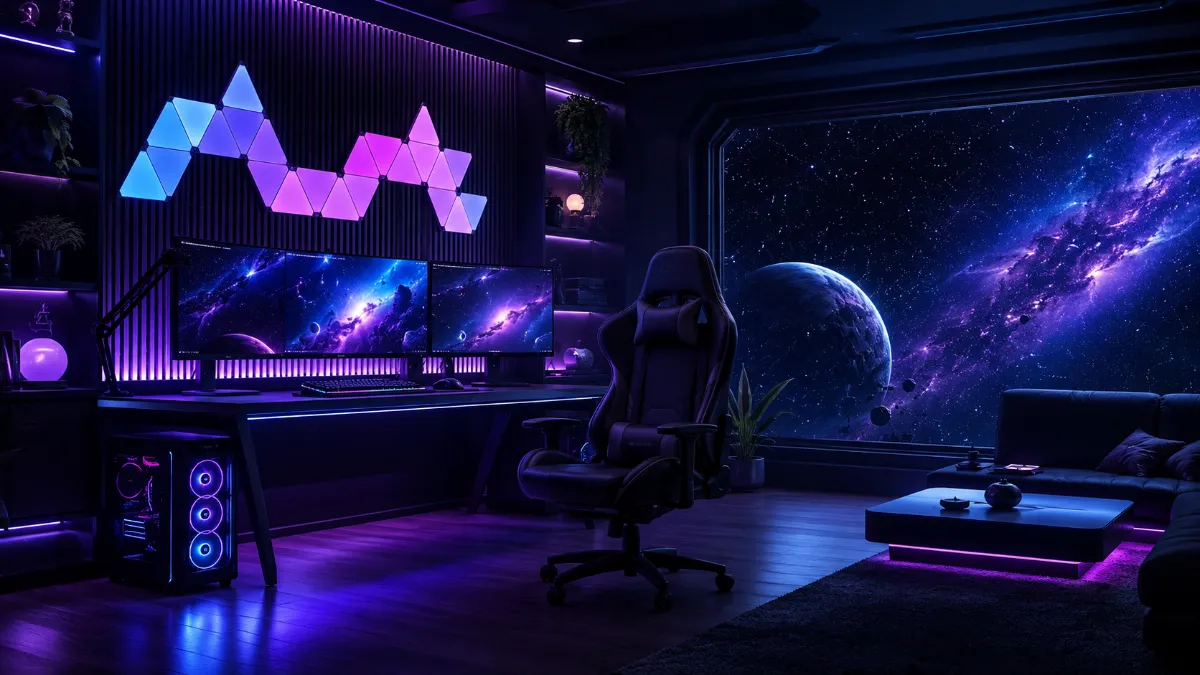
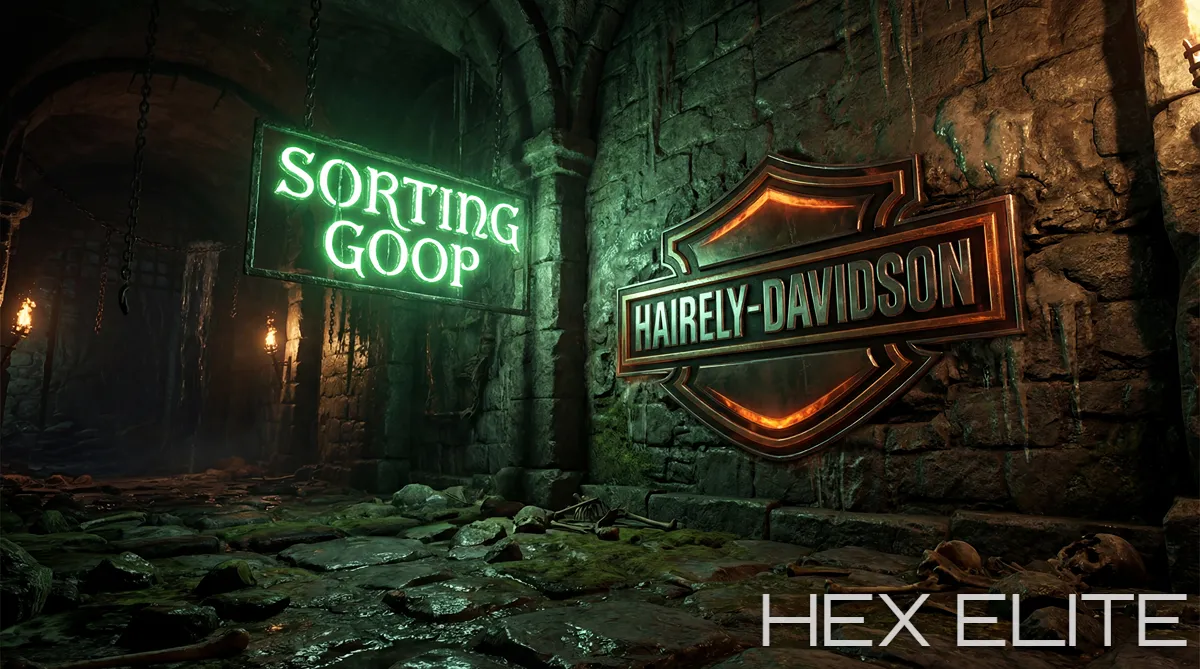
A custom 3D environment is a specific subcategory of custom work where the scene is built in 3D software (Blender, Cinema 4D, Unreal Engine) rather than as flat 2D illustration. It gives genuine spatial depth, real lighting and shadows, parallax that responds correctly to camera moves, and a level of cinematic polish that flat 2D cannot match. This is the highest production tier in the streaming visual market.
Some studios sell what they call "custom" work that is in practice a template with heavier customisation: a base scene reused across clients with the colours, logo, and one or two scene elements changed per buyer. This is closer to a template pack than to bespoke design. If a studio offers a full bespoke scene with almost no briefing or production time, what you are getting is almost certainly a reskinned template, regardless of what the listing says.
Side-by-side comparison
| Attribute | Template Pack | Custom 3D |
|---|---|---|
| Turnaround | Instant download | 3 to 14 days (1-3 days per screen through Hex Elite Studio) |
| Uniqueness | Sold to many streamers | One streamer only |
| Customisation | Logo, colour, name swap | Anything (composition, mood, environment) |
| Visual depth | Mostly 2D illustration | Genuine 3D with depth, lighting, shadows |
| Animation quality | Basic loops, simple motion | Cinematic camera moves, complex layered animation |
| Brand match | "Close enough" to your brief | Designed around your channel specifically |
| Lifespan | 6 to 18 months before replacement | 2 to 4 years |
| Resale value | None | None (but it is your IP) |
| Updates / revisions | Usually means switching packs | Handled through the studio or project scope |
| Best for | New streamers, hobby channels, fast launch | Growth-focused channels, serious brands, mid-tier and above |
The viewer retention argument
The strongest practical argument for custom 3D is what happens to viewers in the first 30 seconds. A new viewer landing on your stream forms an impression of production quality almost instantly, before they have heard you speak, before they understand the content. The visual environment they see is the first signal they get about whether this channel is "serious" or not.
Template packs trigger a specific kind of pattern recognition. Streamers who watch a lot of Twitch have seen the same template pack across dozens of channels, and the recognition is unconscious but real. The viewer's brain registers "this looks like a beginner's stream" within seconds of arriving, even if they could not articulate why. They may stay anyway if the content is good, but they arrive with a lower expectation of quality.
A custom environment does the opposite. Because the viewer has not seen this exact scene before, it reads as bespoke and therefore as serious. The unconscious signal becomes "this person has invested in their channel". Whether they stay or not still depends on the content, but they arrive with a higher initial expectation.
The retention difference is hardest to measure cleanly because so many other factors influence it, but every streamer we have worked with through the transition has reported the same direction of change: their average view duration went up after the visual upgrade, even though their content style did not change. The visuals were doing more retention work than they realised.
Brand recall and clipped content
The clearer measurable advantage of custom 3D shows up in clipped content. When a stream moment gets clipped to TikTok, YouTube Shorts or Twitter/X, the clip is usually 15 to 60 seconds long and crops to vertical format. Most overlay elements (stat panels, follower goals, alert popups) get cropped out or covered by captions. What survives the crop is the background.
If your background is a stock template that 5,000 other streamers also use, the clip travels off-platform with no brand identity attached. Viewers who see the clip in their feed have no way to know which channel it came from beyond the streamer's face and voice. If your background is a distinctive custom 3D environment, that environment becomes a visual signature. People who watch enough clipped content start to recognise specific channels by their world before they even see the streamer's name.
This matters more in 2026 than it did three years ago because clipped content has become a primary discovery channel for new viewers. A meaningful share of new audiences find streamers through TikTok, Shorts and Twitter/X clips before ever visiting Twitch's own discovery surface, and platforms like StreamHatchet have reported that viewers are significantly more likely to follow a streamer after seeing their highlight reels first. The brand element that survives the journey from stream to clip to viewer is the background, not the overlay. Streamers who optimise for clips invest in backgrounds.
The long-term value calculation most streamers get wrong
The calculation most streamers underestimate is not just what helps them launch. It is how often they end up replacing visuals that were never built around their channel in the first place.
A cheap template can feel like the sensible option when you are launching quickly. The problem is that the same template may already have been downloaded by dozens, hundreds or even thousands of other creators. At first that may not matter, but as your channel grows, the visual overlap becomes harder to ignore. Your stream starts to look less like a distinct brand and more like another version of something viewers have already seen.
That is where many creators end up doing the work twice. They use a template to get started, replace it when it begins to feel generic, change packs again when the channel's tone evolves, and eventually commission custom work once they realise they need something that belongs only to them. The template was not a mistake; it simply solved a short-term launch problem rather than a long-term brand problem.
The other factor is time. Every template swap means redesigning scene layouts, re-rigging alerts, retesting OBS playback (covered in our OBS setup guide), and updating cross-platform branding. A custom visual system reduces that churn because it is designed around the channel you are building, not around a marketplace preview image.
The hidden downside of looking like everyone else
Beyond the measurable factors above, there is a less visible but real downside to using a template pack: it puts you in the same visual lane as every other streamer using the same pack. If your goal is to grow past a hobby channel, the streamers you are competing with for new viewers are all using the same handful of well-known overlay packs. You are visually indistinguishable from them in the feed.
This becomes especially obvious in a category like FPS gameplay. Spend an hour watching Twitch's "Just Chatting" or "FPS" categories and you will see the same five or six overlay packs cycle past on different streams. The streamers who use those packs are not bad streamers, but they have made themselves visually interchangeable with their direct competitors. When a viewer is deciding which of three similar streams to watch, the visual identity is one of the few differentiating factors before content starts.
This is the argument we hear back from streamers who eventually commission custom work most often: not "the template was bad" but "I realised I looked like everyone else and there was nothing I could do about it without commissioning custom". By that point they have usually gone through several visual resets and are ready for a system that finally feels like their own.
When a template pack genuinely is the right call
Templates are not always the wrong answer. Three situations where a ready-made template pack is genuinely the right move:
- You are streaming as a hobby and have no growth ambition. A template pack provides perfectly adequate visual polish for a channel that is for fun, not for audience growth.
- You need to launch this week and are committed to upgrading later. A template buys you 3 to 6 months of acceptable visuals while you build content and figure out what your brand actually wants to be. Coming back to commission custom work after you understand your channel's voice is often a better outcome than commissioning custom work in week one with no clarity.
- You have a temporary or one-off use. Charity streams, single-event broadcasts, sponsored content where the visual will only be used once. There is no point investing in custom for something that will not run for a year.
Across all three cases, the common thread is "the visual lifespan is short and the audience growth ceiling is low". If either of those changes, custom becomes the right call.
When custom is the obvious answer
Three situations where the custom path is the right call from day one:
- You are already a partnered or affiliate streamer. Your audience is forming long-term impressions of your brand, and your visuals are part of that trust signal every time someone lands on the channel.
- You are launching a new channel with established reach from another platform. A YouTuber moving into Twitch, a TikTok creator launching a stream, a Twitter personality starting a channel. Your audience has expectations of production quality based on your other work, and a generic template pack will read as a step down.
- You are competing in a high-density category like Just Chatting, Variety, or any large FPS title where visual differentiation is one of the few moats available to you against thousands of similar channels.
If any of those describes your situation, the question is not "template or custom" but "which custom studio". In those cases, skipping the template stage often avoids a rebrand you were already going to need later.
The middle-ground option most streamers miss
There is a third path that gets discussed less than it should: commissioning custom work for the high-impact pieces and using templates for the low-impact pieces. The single highest-impact visual on most channels is the background or full-screen scene (covered in our overlay vs background guide). The lower-impact visuals are alert popups, follower-goal bars, and small UI elements that viewers see briefly.
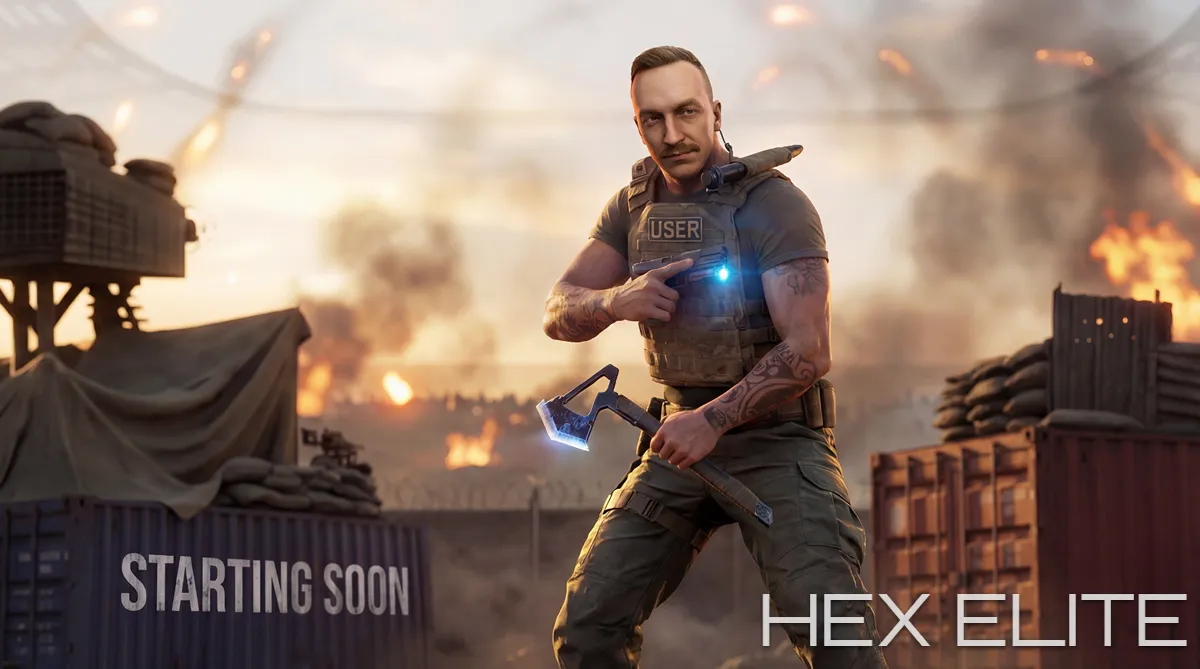
A pragmatic middle-ground build looks like this: commission custom 3D work for the screens viewers actually remember - Starting Soon, BRB, Ending, Intermission and main background scenes - then keep smaller utility elements like alerts, stat tickers and follower goals simple. The combined visual identity still reads as bespoke because the elements that fill most of the screen are built around your channel, while the small frequently replaced UI elements stay easy to update.
This is closer to how most professional creators think about their visual systems in 2026 than the binary "all custom or all template" framing implies.
The takeaway
Template packs are not bad. They are the right answer for a specific set of situations: hobby channels, fast launches, temporary uses. Outside those situations, the apparent advantage of templates fades once you account for the replacement cycle, the time spent redesigning your scenes repeatedly, and the brand-recall disadvantage of looking like every other streamer in your category.
The streamers who pull ahead in 2026 are the ones who treat their visual identity as a long-term asset rather than something they repeatedly patch with new downloads. That mostly means custom 3D for the high-impact pieces (Starting Soon, BRB, full-screen backgrounds) with sensible restraint elsewhere. If you are already past the hobby stage and committed to building a channel, the question is when to commission custom work, not whether to.
And if you are reading this article specifically because you have already cycled through one or two template packs and are wondering whether to do it again or finally commission custom: you almost certainly already know the answer. Most streamers in that position waited 6 to 12 months longer than they needed to.